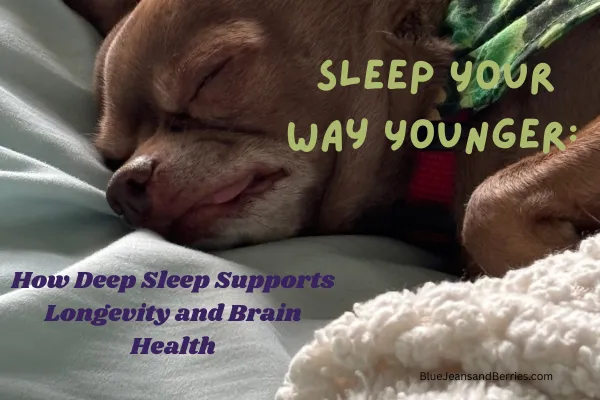
Sleep Your Way Younger: How Deep Sleep Supports Longevity and Brain Health
If there were a pill that could:
improve memory
reduce inflammation
support weight balance
boost immune function
and help your body repair itself
…people would line up for it.
The good news?
You already have access to it every single night.
It’s called sleep.
And when it comes to healthy aging, sleep may be one of the most powerful—and most overlooked—tools available.
Why Sleep Matters More As We Age
In our younger years, we can often “get away with” poor sleep.
Late nights, early mornings, running on caffeine…
But over time, the effects start to catch up.
Research shows that chronic sleep deprivation is linked to:
increased inflammation
impaired metabolism
reduced cognitive function
weakened immune response
accelerated biological aging
In other words, how you sleep directly impacts how you age.
What Happens During Deep Sleep
Sleep isn’t just “rest.”
It’s an active, highly organized process where your body goes into repair mode.
During deep sleep:
✔ Growth hormone is released
This supports tissue repair, muscle maintenance, and recovery.
✔ Your brain clears waste
The glymphatic system helps remove toxins that build up during the day.
✔ Inflammation decreases
Helping protect your cells and tissues over time.
✔ Stress hormones regulate
Lower cortisol levels support overall balance and resilience.
✔ Memory consolidates
Helping with learning, focus, and cognitive health.
Think of sleep as your body’s nightly maintenance cycle.
Skip it—and things start to break down faster.
Sleep and the Aging Brain
One of the most fascinating areas of research is the connection between sleep and brain health.
During deep sleep, your brain clears out metabolic waste, including proteins associated with cognitive decline.
When sleep is consistently disrupted, this “cleanup system” becomes less efficient.
Over time, that can impact:
memory
focus
mental clarity
long-term brain health
Sleep isn’t just about feeling rested tomorrow.
It’s about protecting your brain for the future.
The Stress–Sleep–Aging Connection
Here’s where things get real-life.
Stress affects sleep.
Poor sleep increases stress.
And both can accelerate aging.
Chronic stress raises cortisol levels, which can:
interfere with sleep quality
increase inflammation
disrupt hormones
impact metabolism
This creates a cycle that’s hard to break.
But the encouraging part?
Improving sleep can help regulate stress—and vice versa.
How Much Sleep Do You Actually Need?
Most adults need 7–8 hours of quality sleep per night.
Not just time in bed—but actual restorative sleep.
Signs you may not be getting enough quality sleep:
waking up tired
needing caffeine to function
brain fog
irritability
difficulty focusing
If that sounds familiar, you’re not alone.
And it’s something you can improve.
Simple Habits to Improve Sleep Quality
You don’t need a complicated routine to sleep better.
A few small changes can make a big difference.
1️⃣ Create a Consistent Sleep Schedule
Going to bed and waking up at the same time helps regulate your internal clock.
Your body loves rhythm.
2️⃣ Limit Screens Before Bed
Blue light from phones and TVs can interfere with melatonin production.
Try turning off screens 30–60 minutes before sleep.
3️⃣ Get Morning Sunlight
Exposure to natural light early in the day helps set your circadian rhythm and improves sleep quality at night.
Even 5–10 minutes helps.
4️⃣ Create a Wind-Down Routine
This can be simple:
reading
stretching
prayer or meditation
journaling
Think of it as a signal to your body that it’s time to shift gears.
5️⃣ Support Your Body Nutritionally
What you eat during the day impacts how you sleep at night.
Balanced meals, adequate protein, and a variety of whole foods help support hormone balance and recovery.
In some cases, targeted supplementation may help support relaxation and sleep quality—but always as a complement to healthy habits, not a replacement.
Sleep Is Not Lazy. It’s Strategic.
In a culture that often glorifies being busy, sleep can feel like something we should sacrifice.
But when it comes to long-term health, that’s a costly trade.
Sleep is when your body:
repairs
resets
restores
protects
It’s not time lost.
It’s an investment in how you function tomorrow—and how you age over time.
Want to Support Your Body as You Age?
This article is part of my Reverse Aging series, where we break down simple, science-backed habits that support long-term health—without overwhelm.
If you missed the earlier articles:
👉 Can You Reverse Aging? (The Science Explained)
https://bluejeansandberries.com/post/can-you-reverse-aging-what-the-science-really-says-about-slowing-the-aging-process
👉 Eat to Age Backwards (Nutrition & Cellular Repair)
https://bluejeansandberries.com/post/eat-to-age-backwards
👉 Do Anti-Aging Supplements Work?
https://bluejeansandberries.com/post/do-anti-aging-supplements-work
Next up:
Why strength training may be the closest thing we have to a “fountain of youth.”
With vitality & joy,
Terry
#BlueJeansandBerries