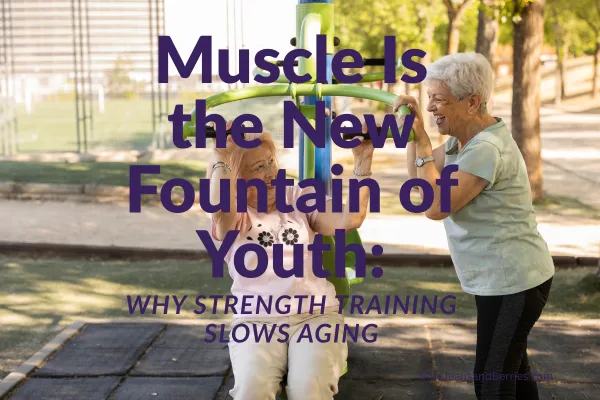
Muscle Is the New Fountain of Youth: Why Strength Training Slows Aging
If there were one habit I could encourage everyone to prioritize as they age…
It wouldn’t be a supplement.
It wouldn’t be a detox.
It would be this:
Build and maintain muscle.
Because when it comes to healthy aging, muscle isn’t just about how you look.
It’s about how you function.
Why Muscle Matters More Than You Think
Starting around age 30, we naturally begin to lose muscle mass.
This process—called sarcopenia—can accelerate if we’re not actively working to maintain it.
Over time, loss of muscle can lead to:
slower metabolism
reduced strength
increased risk of falls
decreased independence
poorer blood sugar control
In other words, muscle loss isn’t just cosmetic.
It directly impacts how well we age.
Muscle Is Metabolic Currency
One of the biggest benefits of muscle is its role in metabolic health.
Muscle helps:
✔ regulate blood sugar
✔ improve insulin sensitivity
✔ support fat metabolism
✔ increase overall energy use
The more muscle you have, the more efficiently your body can manage energy.
That’s why strength training is often linked to a lower risk of metabolic conditions.
Strength Training and Longevity
Research continues to show that maintaining muscle is associated with:
improved longevity
better mobility and balance
stronger bones
reduced risk of chronic disease
Strength isn’t just about lifting heavier weights.
It’s about building a body that can support you for the long haul.
Muscle and Your Cells
Here’s where it gets really interesting.
Strength training doesn’t just affect your muscles—it impacts your cells.
It helps:
support mitochondrial function (your cellular energy system)
reduce inflammation
improve hormone balance
enhance recovery and resilience
In simple terms?
Movement tells your body to stay strong, adaptable, and efficient.
And your body responds.
You Don’t Have to Live in the Gym
Let’s clear this up right away.
You do not need to spend hours in the gym to benefit from strength training.
Simple, consistent movement is what matters most.
What Counts as Strength Training?
Strength training can include:
bodyweight exercises (squats, push-ups, lunges)
resistance bands
dumbbells or kettlebells
machines at a gym
even gardening, lifting, and carrying
If your muscles are working against resistance… it counts.
How Often Should You Strength Train?
A great starting point:
2–3 times per week
Focus on:
major muscle groups
controlled, intentional movement
proper form over heavy weight
Even short sessions (20–30 minutes) can make a meaningful difference.
Muscle = Independence
One of the most overlooked benefits of strength training is independence.
Muscle helps you:
get up from the floor
carry groceries
climb stairs
maintain balance
prevent injury
These are the things that determine the quality of life as we age.
Not the number on the scale.
It’s Never Too Late to Start
This is one of my favorite parts to share.
Research shows that people can build muscle at any age.
Even in their 60s, 70s, and beyond.
Your body is incredibly adaptable.
It just needs the right signal.
Pairing Nutrition with Strength
To support muscle, your body also needs the right fuel.
a variety of whole foods (my favorite whole food supplement)
adequate protein intake (my favorite plant protein shake)
nutrient-dense meals (healthy recipe ideas)
hydration (my favorite hydration tool)
This is where your nutrition habits and strength training work together.
And when needed, strategic supplementation can help support recovery and nutrient intake—but always as a complement, not a replacement.
Simple Ways to Get Started
If you’re new to strength training, keep it simple:
✔ Start with 2 days per week
✔ Use bodyweight exercises at home
✔ Focus on consistency, not intensity
✔ Add resistance gradually
You don’t need perfect.
You need progress.
Muscle Is an Investment in Your Future
It’s easy to focus on short-term goals.
Weight loss. Energy. Feeling better today.
But building muscle is one of the best long-term investments you can make.
Because every time you move your body with intention, you’re telling it:
“Stay strong. Stay capable. Stay resilient.”
Want to Age Strong, Not Just Older?
This article is part of my Reverse Aging series, where we break down simple, science-backed habits that support long-term health.
If you missed the earlier articles:
👉 Can You Reverse Aging? (The Science Explained)
https://bluejeansandberries.com/post/can-you-reverse-aging-what-the-science-really-says-about-slowing-the-aging-process
👉 Eat to Age Backwards (Nutrition & Cellular Repair)
👉 Do Anti-Aging Supplements Work?
Next up:
How stress impacts aging—and simple ways to protect your health.
With vitality & joy,
Terry
#BlueJeansandBerries